
Choosing a shower door involves more than picking a glass style. The enclosure affects how the bathroom looks, how easily the shower can be cleaned, how much room is available around the entrance, and how much the renovation will cost.
Two popular options are frameless and semi-frameless shower doors. Both use glass to create a cleaner appearance than traditional fully framed enclosures, but their construction and practical benefits differ.
The right choice depends on the bathroom’s layout, the finish you want, and the amount you plan to invest. Looking at how each style performs in everyday use can help you make a decision that works long after the renovation is complete.
First, What Separates the Two Designs?
The main difference is how the glass panels are supported.
A frameless shower door uses thick tempered glass secured with hinges, clips, brackets, or other specialized hardware. It does not have a continuous metal frame surrounding the moving door. Some designs use discreet channels or support bars where needed, but the glass remains the dominant visual feature.
A semi-frameless shower door combines exposed glass edges with metal framing along selected sections of the enclosure. The fixed panels may sit within metal channels, while the door itself has little or no visible framing around certain edges. The exact configuration varies by manufacturer and design.
Neither style is automatically better for every bathroom. The differences become clearer when you consider appearance, cleaning, everyday use, and project cost.
Appearance: How Much Metal Do You Want to See?
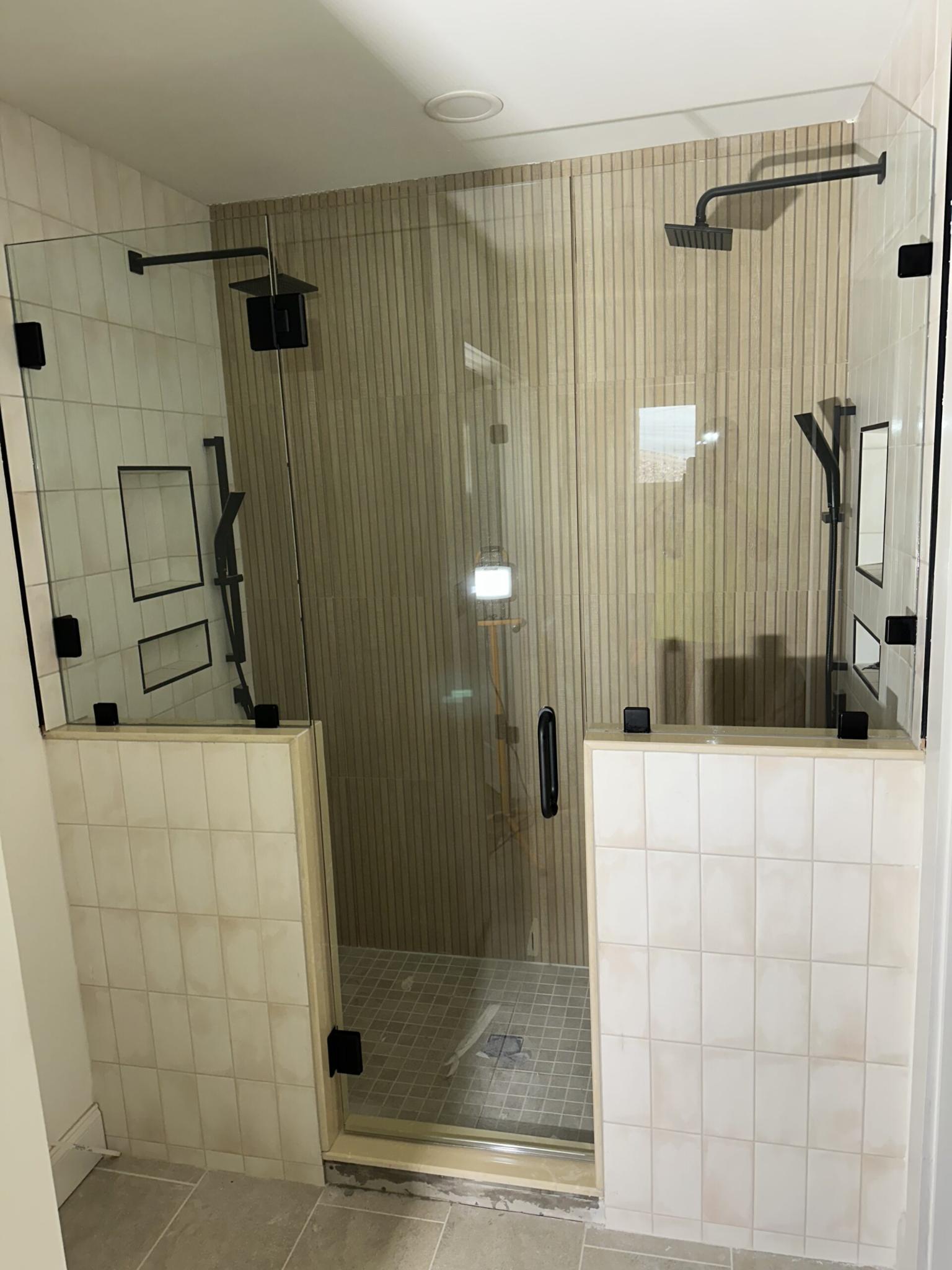
Frameless enclosures are often chosen for their minimal appearance. Without a prominent frame around the glass, the shower blends more naturally with the rest of the bathroom.
Decorative tile, stonework, shower fixtures, and other finishes remain visible.
This can be particularly effective in bathrooms with detailed tile patterns or carefully selected wall finishes. A frameless enclosure does not compete with those features, making it a strong option for contemporary renovations and bathrooms where a spacious visual effect is important.
Semi-frameless doors offer a middle ground. They retain some metal structure, which creates more visible lines around selected edges, but still provide a largely glass-focused appearance. Homeowners can coordinate the framing with faucets, cabinet hardware, and towel bars for a consistent design.
The distinction is not simply modern versus traditional. A well-designed semi-frameless enclosure can look polished and current, while a frameless design can suit both contemporary and transitional bathrooms. The surrounding finishes and hardware choices influence the final result.
Cleaning: Where Does Maintenance Become Easier?
Both types have glass surfaces that require routine cleaning. Water droplets, soap residue, and mineral deposits can appear in either style, particularly in bathrooms with hard water.
The difference is the amount of metal and the number of edges where residue can collect.
Frameless enclosures generally have fewer continuous metal channels and frame sections.
This means there are fewer narrow areas that require extra attention during cleaning.
Homeowners can wipe the glass surfaces and maintain the hardware without working around an extensive frame.
Semi-frameless designs have additional metal sections that may need occasional cleaning.
Depending on the configuration, water and soap residue can collect along bottom tracks, side channels, or other framed areas. These sections are manageable, but they may require more detailed upkeep.
For either option, regular care makes a difference. Wiping the glass after showering, cleaning hardware with appropriate products, and avoiding abrasive materials help preserve the enclosure’s appearance. The quality of the hardware and the finish also influence how well it holds up over time.
Everyday Function: Consider the Way You Use the Shower
The enclosure should work with the bathroom rather than make movement around it more difficult. Door operation, entry width, fixture placement, and water control all deserve attention before installation.
Frameless doors can be designed around different shower configurations, including hinged doors, sliding panels, and glass-to-glass arrangements. This flexibility is useful when a standard door size or opening direction does not suit the room. However, the heavier glass requires appropriate hinges, support hardware, and secure mounting points.
Semi-frameless systems can provide a practical solution when homeowners want a glass enclosure with some additional framing. The metal sections help support selected panels, and certain configurations work well for standard shower openings. They may also offer useful options where the bathroom’s existing layout limits the available door arrangements.
Water containment deserves separate consideration. Frameless doors do not have a continuous frame sealing every edge, so small gaps may remain around the door or between panels. Proper placement of seals, sweeps, and panels helps manage splashing. Semi-frameless designs may have more framed sections that help guide water, but the result still depends on the enclosure’s construction and the shower layout. Neither style should be selected on appearance alone.
Budget: Where Will Your Renovation Money Go?
Cost is often one of the deciding factors. Frameless enclosures generally require a larger investment because they use heavier glass, specialized hardware, precise measurements, and installation methods suited to the weight of the panels.
The glass thickness is one part of the calculation. DTS Glass & Mirror typically works with 3/8-inch shower glass, with 1/2-inch glass used for larger installations when the design calls for it. The dimensions, number of panels, hardware selection, and enclosure configuration all influence the final price.
Semi-frameless doors can be less expensive because their construction may use additional framing and a different glass and hardware system. This makes them worth considering when the renovation budget is limited but the homeowner still wants a clean glass enclosure.
However, there is no universal price difference that applies to every project. A large semi-frameless enclosure with multiple panels may cost more than a simple frameless door.
Requesting a quote based on actual measurements and design requirements is more useful than comparing the two styles by name alone.
Which One Makes Sense for Your Bathroom?
Your priorities should guide the decision.
Choose frameless when:
- You want minimal visible metal and uninterrupted views of the shower tile.
- A clean, open appearance is a priority.
- You have a custom shower layout that needs a tailored glass configuration.
- Your renovation budget allows for heavier glass and specialized hardware.
Consider semi-frameless when:
- You prefer a glass-forward appearance with some visible metal framing.
- You want to balance appearance and project cost.
- The shower opening works well with an available semi-frameless configuration.
- You prefer the additional framing included in the selected system.
Bathroom size can also influence the decision. Frameless glass is often appealing in compact rooms because fewer visible metal lines can make the enclosure feel less imposing.
In larger bathrooms, either style can work well, depending on the overall design and the visual effect you want.
It is also worth considering the other finishes in the room. A bathroom with prominent chrome fixtures may suit matching framing or frameless hardware, while matte black or brushed finishes can create a different visual effect. Keeping the metal finishes consistent helps the enclosure feel like part of the original design rather than a separate addition.
Installation Quality Matters as Much as the Door Style
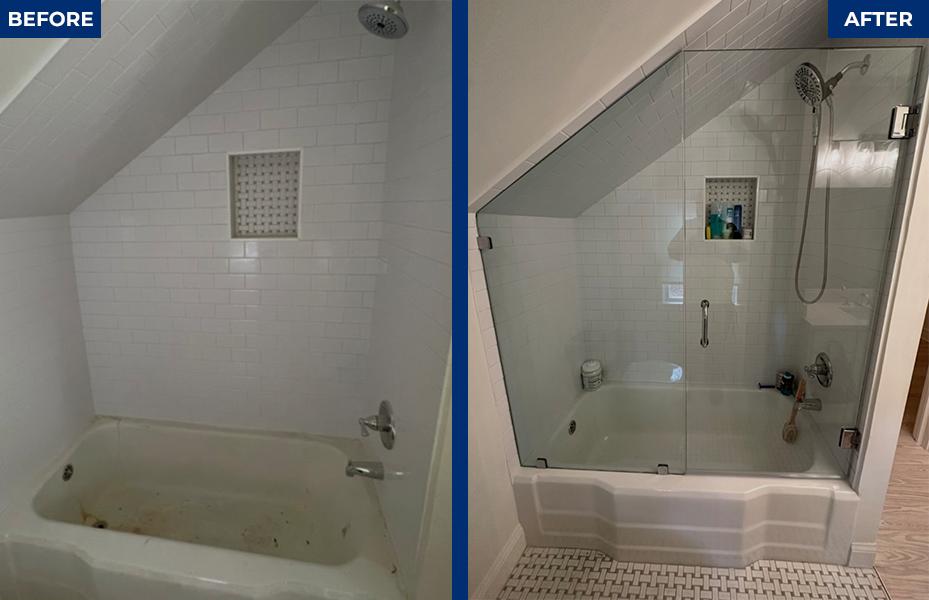
Even a high-quality shower door can disappoint when measurements, support, or alignment are overlooked. Frameless installations require particular attention to glass dimensions, hinge placement, wall conditions, and the weight each mounting point must support. Semi-frameless systems also need accurate measurements so that the panels and framing align correctly.
The timing of installation matters during a renovation. Measurements should account for the finished tile and other surfaces that determine the actual shower opening. Changes to the walls, curb, or flooring can affect the final fit.
A professional assessment can help identify potential issues before the glass is ordered. It also provides an opportunity to discuss door clearance, entry access, hardware finishes, and the best enclosure arrangement for the room.
Make the Choice Around Your Needs
Frameless and semi-frameless shower doors can both create an attractive, functional bathroom. Frameless designs appeal to homeowners who want minimal hardware, custom configurations, and an open visual effect. Semi-frameless options offer a balance of exposed glass and selected metal framing, often at a lower starting cost.
DTS Glass & Mirror provides custom shower glass solutions for homeowners across North Georgia. The team can assess the shower opening, discuss glass and hardware options, and help determine which enclosure style fits the bathroom’s dimensions and renovation goals.
Request a quote for a shower door installation tailored to your space.